Shed, RV and generator pads in Summerville — outside the easement, inside the coverage
A pad for the shed, the boat, the RV or the standby generator is a small slab with three big rules in Summerville: stay out of the easements, count it against lot coverage, and build it thick enough that the Lowcountry's ground doesn't tilt the generator.
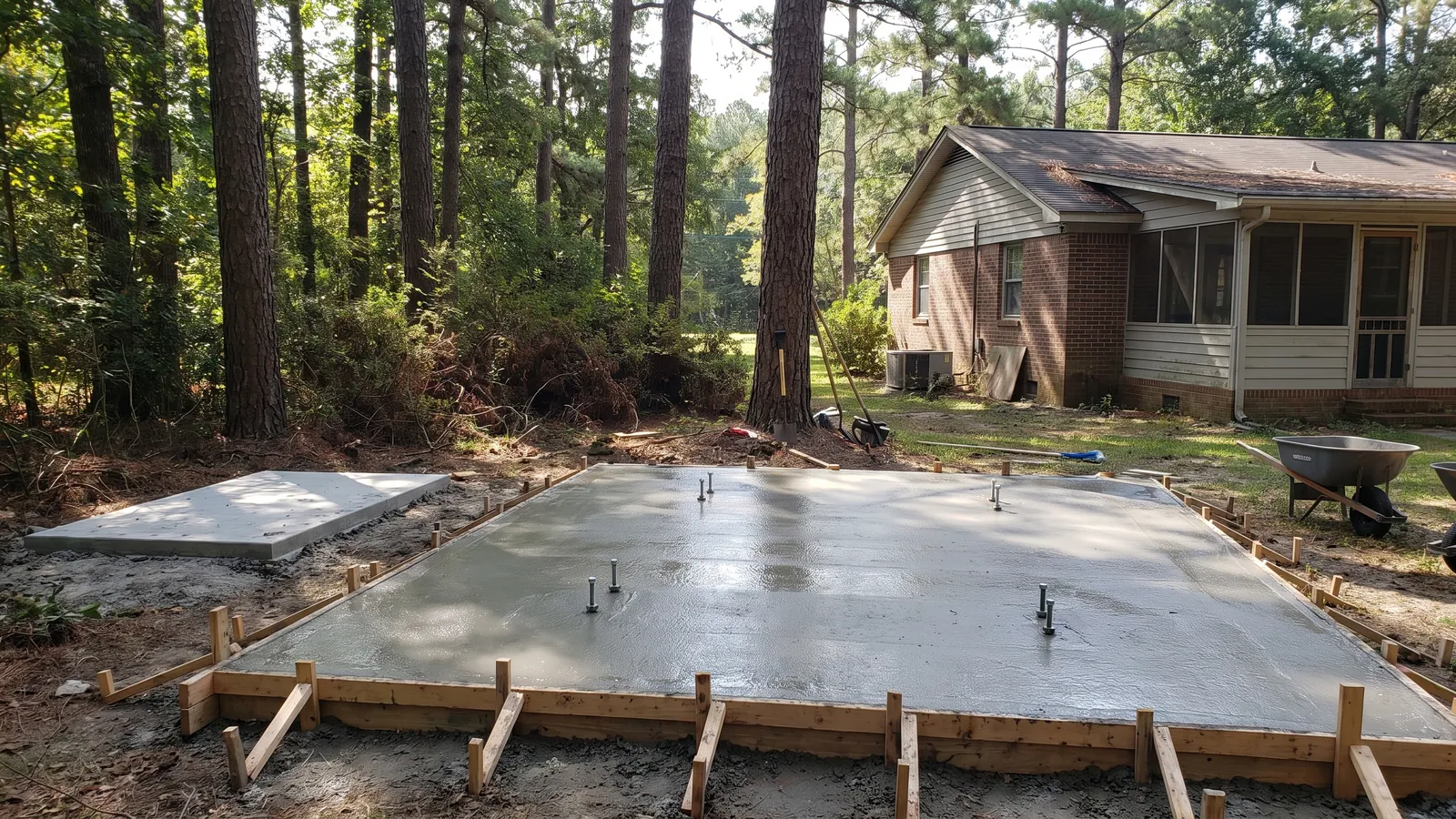
Half the back yards in Summerville's subdivisions have something that needs a pad: a storage shed, a boat trailer, an RV, a standby generator after the last outage, a hot tub, a workshop. The slab is simple — four inches for a shed, five to six with a turned-down thickened edge for an RV or a boat, a thickened and leveled pad with anchor bolts set to the manufacturer's template for a generator or a hot tub, all on compacted stone with wire or rebar — but where it goes is the whole question here. Dorchester County Public Works says, in those words, that improvements prohibited from locating in easements include driveways and fences; the Town says structures cannot be placed within any easement; Summerville CPW's water easements run seven and a half feet each side of the main and sewer easements ten. The rear ten feet of a lot in a 2000s subdivision is very often a drainage easement, and the corner by the fence where the shed 'fits' is very often in it. We read the plat first.
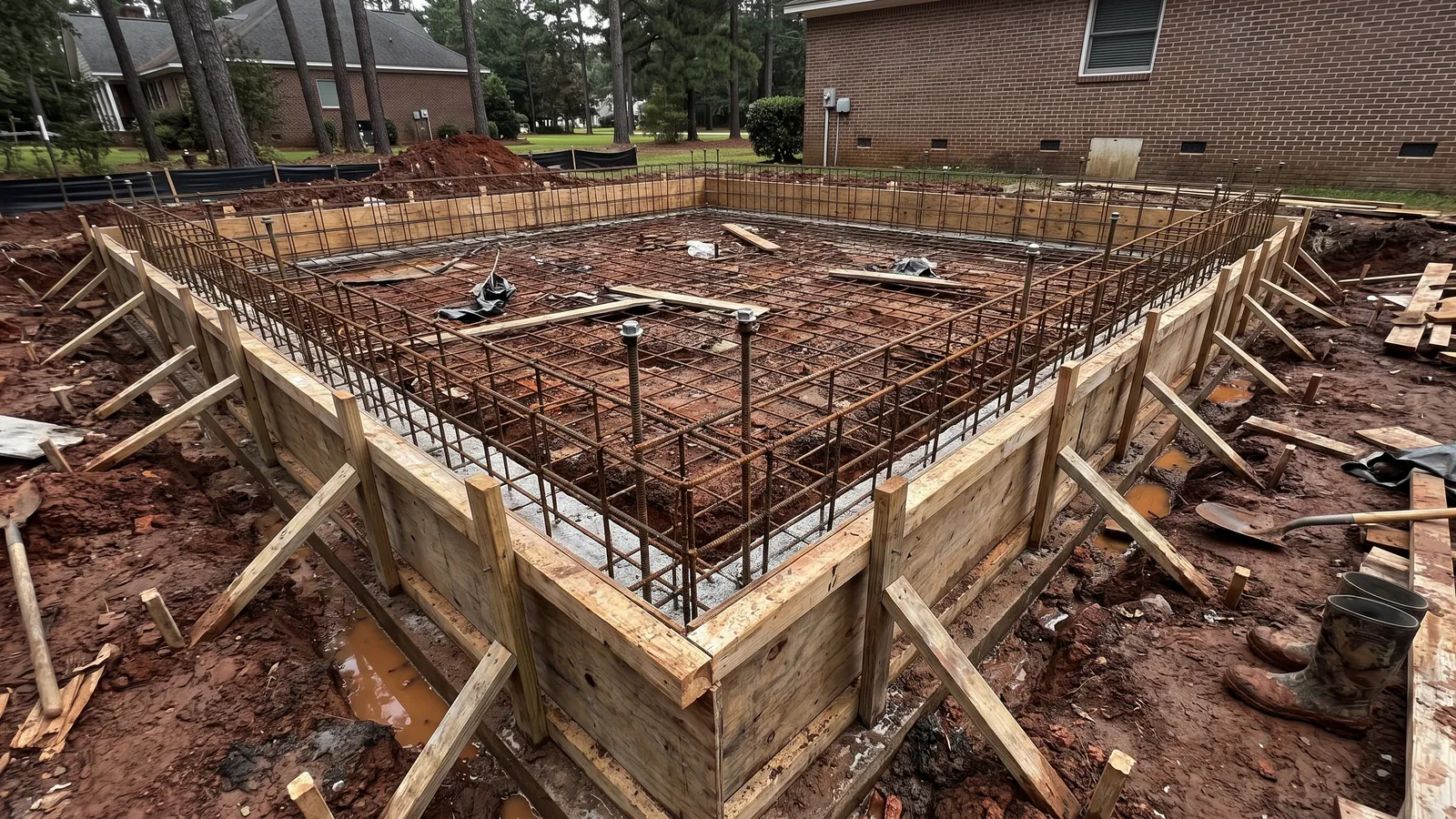
The second rule is coverage and permits. A pad is paving and counts toward the Town's 30 percent impervious cap; a shed over a certain size is a structure that needs a building permit (the counties' exemptions for small accessory buildings vary — Berkeley County's answer is 'call the permit office,' and we do); a generator pad sits under a permitted electrical and gas installation; and the HOAs at Nexton, Cane Bay, Carnes Crossroads and Summers Corner have setback and screening rules for all of them. The third rule is the ground: a generator that tilts because its pad settled into the Rains soil runs badly and voids its warranty, and an RV pad that holds water rots the tires. So: compacted base, reinforcement, a turned-down edge where the load is at the perimeter, a crown or a slope so water leaves, and for a generator, a pad poured level to within an eighth of an inch with the bolts set in the template. Shed floors get a vapor barrier under the slab so the contents don't mildew in a Lowcountry summer.
What's included
Easement check first
Drainage, utility and CPW easements located on the plat; the pad placed where the Town and county allow it.
Coverage and permit
Counted toward the 30 percent cap; the accessory-building permit and HOA setbacks confirmed for your address.
Thickness for the load
Four inches for sheds, five to six with a turned-down edge for RVs and boats, thickened and leveled for generators.
Anchor bolts to template
Generator, hot tub and shed anchors set in the wet concrete to the manufacturer's layout.
Drainage
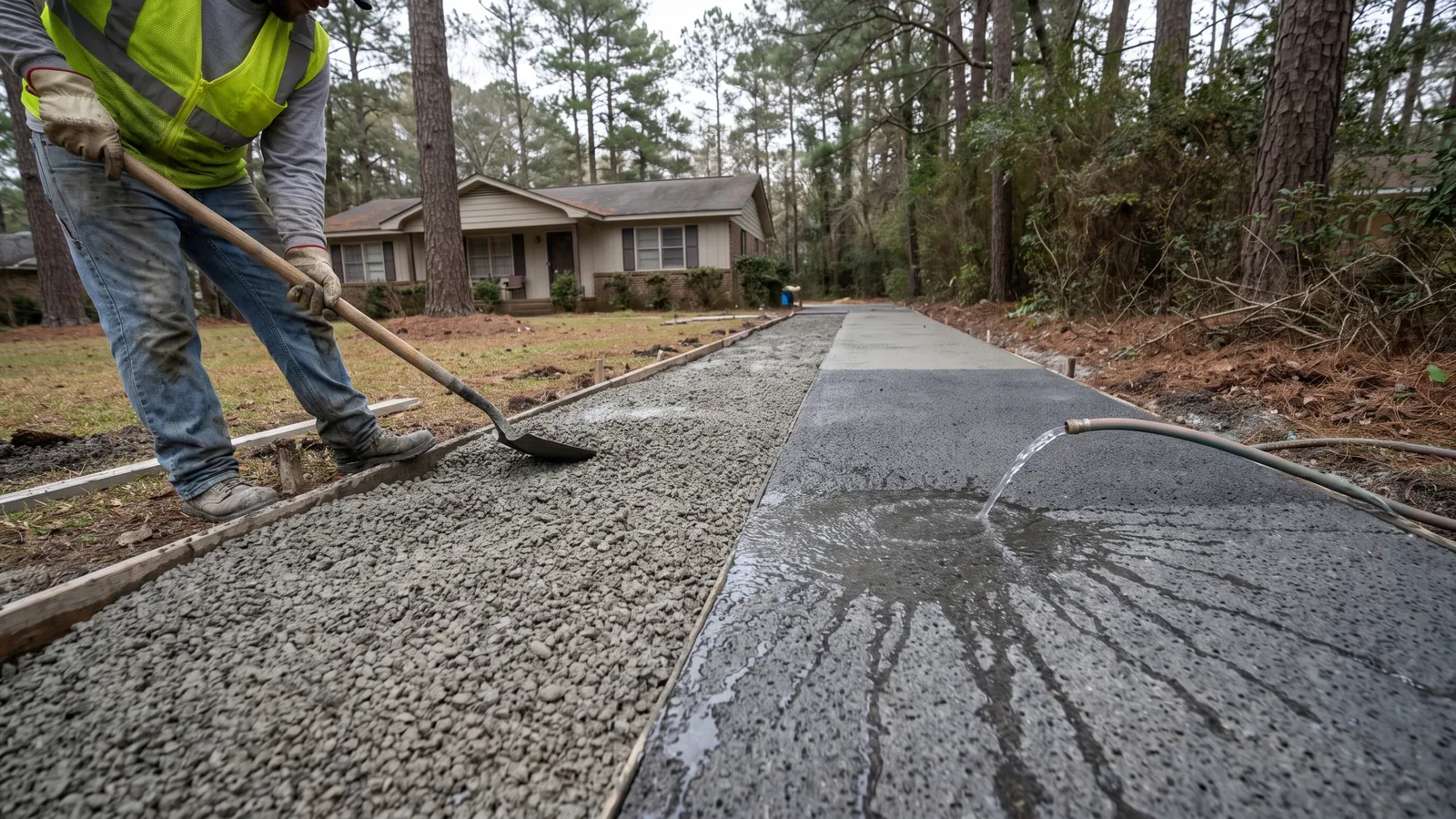
Compacted base and a crown or slope so the pad doesn't pond on the wet soils.
Vapor barrier for sheds
Poly under the slab so the shed's contents don't mildew.
Slab and pad costs in Summerville, SC
| Job | Typical price | Notes |
|---|---|---|
| Shed pad, 10×12, 4 in reinforced | $1,300 – $2,000 | Vapor barrier, anchors |
| Shed pad, 12×20 | $2,400 – $3,600 | Thickened edge |
| Boat or RV pad, 12×40, 6 in with turned-down edges | $5,500 – $8,500 | Graded to drain; pervious optional |
| Standby generator pad | $500 – $1,200 | Leveled, bolts to template |
| Hot tub pad, 8×8 or 10×10 | $900 – $1,700 | Thickened, leveled |
| Workshop or garage slab, per sq ft | $7 – $11 | Monolithic turned-down footing; see foundations |
These are 2026 Summerville-area ranges so you can budget. Your written price is itemized — removal, base, thickness, reinforcement, finish, joints, the permit and its inspections — and good for 30 days.
Recent work
Questions we get about slabs and pads
Can I put the shed in the back corner by the fence?
Only if that corner isn't a drainage or utility easement — and in a 2000s subdivision the rear ten feet usually is. We pull the plat and tell you where the pad can legally go.
Do I need a permit for a shed pad?
The pad itself usually not; the shed may, depending on size and county. Berkeley County's published answer is to call the permit office, Dorchester has a small-accessory exemption, and the Town wants the structure on the plot plan. We find out for your address before we pour.
Does a pad count against lot coverage?
Yes, like any paved surface, unless it's pervious concrete. An RV pad is big enough to matter on a quarter-acre lot; we run the math.
How level does a generator pad need to be?
Within about an eighth of an inch across the pad, with the anchor bolts set to the manufacturer's template. A tilted generator is an unhappy one; we pour it level and check it with a laser.
Will an RV pad hold up to the weight?
Six inches with turned-down edges and rebar, on compacted stone, yes. Four inches on dirt — the builder-shed-pad approach — won't.